Bee Safe Bee Removal provides professional bee removal in Tampa, FL for homeowners, businesses, property managers, and commercial sites dealing with swarms, active hives, and hidden colonies inside structures. Whether bees are clustering on a tree branch or moving through a soffit, wall, roofline, shed, or utility area, we focus on real hive solutions instead of surface-level treatments that leave the main problem behind.
In Tampa, bee activity can appear suddenly. A cluster of bees may show up on a branch, fence, eave, or roof edge and look temporary, but once bees begin entering a cavity in siding, stucco, fascia, vents, or another protected area, the job often changes from simple swarm removal to structural bee hive removal. If you are not sure what you are seeing, our guide on what to do with a bee swarm explains the early signs of a swarm versus a colony that has already settled in.
Florida guidance makes an important distinction between live removal and extermination. According to the Florida Department of Agriculture and Consumer Services, nuisance honey bees may be removed alive by a registered beekeeper, while eradication is handled under licensed pest control rules. That matters because not every bee problem should be approached the same way. Some colonies can be removed alive, while others require a different plan depending on access, safety, and where the bees are nesting.
That is one reason many Tampa customers spend time reviewing our About Us, customer reviews, and broader bee removal services before scheduling. They want to know whether the company they hire understands bees, understands structures, and understands the difference between a temporary swarm and an established hive inside the building.
Live Bee Removal in Tampa for Homes and Businesses
A good Tampa bee removal service does more than remove visible bees at the entry point. In many cases, the real issue is deeper inside the structure. Bees may be entering through a gap in the roofline, an opening near the soffit, a crack along masonry, a vent, or a small seam in siding. Once inside, they can build comb, store honey, and keep expanding the colony in a space that is hard to see from outside.
That is why our work is centered on locating the nest area, identifying how bees are using the structure, and removing comb and hive material whenever access allows. This is a major difference between a real bee hive removal service and a quick chemical knockdown. UF/IFAS guidance for Florida notes that spraying the entrance of a nesting colony often does not fully solve the hidden problem inside the structure, which is exactly why proper cleanout matters. You can learn more about this on our page about the safest approach to bee hive removal and our article on questions to ask before hiring a bee removal company.
Tampa properties present a wide range of nesting challenges. We regularly see bees choose soffits, wall voids, roof edges, attic transitions, meter areas, fences, trees, sheds, and other enclosed spaces that offer shelter from weather and foot traffic. Once that happens, leaving the hive behind can lead to staining, odor, repeat bee activity, and additional cleanup later.

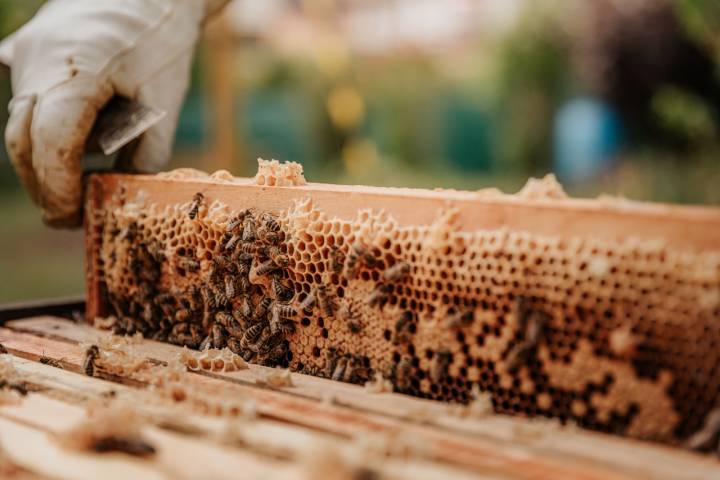
Why Honey Bee Removal Matters Beyond One Property
Many property owners prefer live removal when possible, and there is a practical reason for that. The FDACS apiary program notes that Florida consistently ranks among the top honey-producing states, with roughly 17 million pounds of honey valued at about $27 million annually. A separate UF/IFAS economic analysis estimated that Florida beekeeping operations generated more than $93 million in revenue in 2020, including over $33 million from pollination services alone. In other words, honey bees are not just another nuisance insect. When live removal is a realistic option, it helps protect a species that plays a real role in agriculture and food production.
If that matters to you, visit our pages on beekeeping and the benefits of having a beekeeper remove bees to see why many customers prefer a bee-focused approach when the situation allows it.
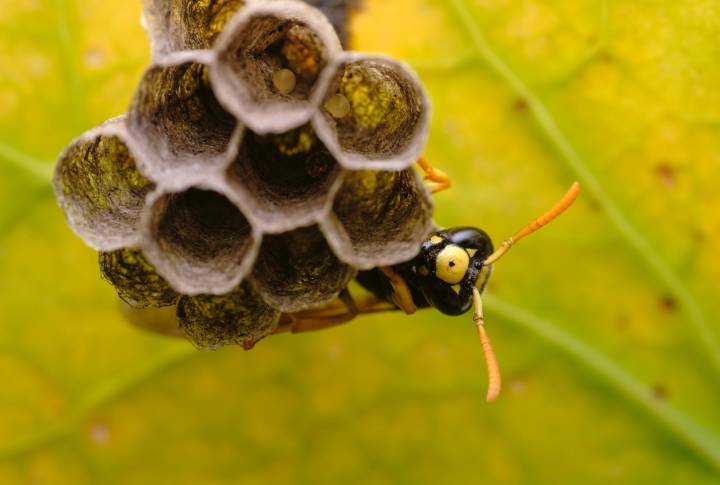
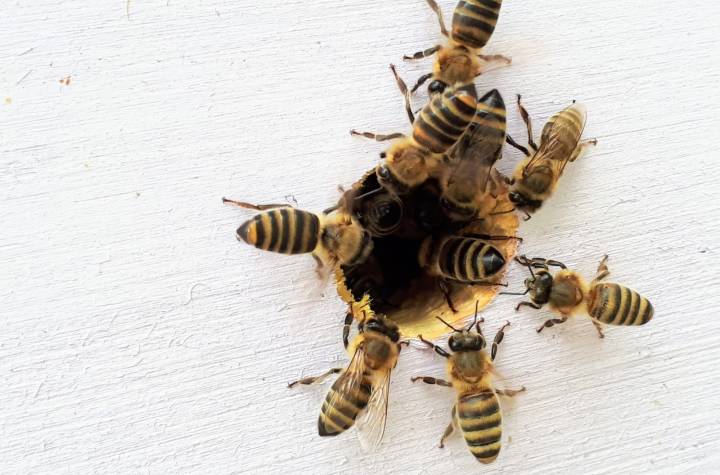
Swarm Removal vs. Established Hive Removal
One of the most common sources of confusion is the difference between a swarm and a built-in hive. A swarm is usually a temporary cluster of bees resting while scout bees look for a permanent place to live. An established colony has already moved into a cavity and begun building comb. Those are two very different service calls.
A swarm hanging from a tree, fence, or branch can often be handled more directly. A colony entering through a soffit, wall, roof seam, or block cavity usually requires a more involved process. That may include opening part of the affected area, removing comb and bees, cleaning the cavity, and discussing sealing or repairs afterward. Our page on what to do with a bee swarm explains why it is important to act before a temporary cluster turns into a structural hive.
Bee Hive Removal From Soffits, Walls, Roofs, and Hidden Cavities
Many Tampa calls begin with a homeowner saying they only see “a few bees” going in and out of a small opening. A week or two later, traffic is heavier, the buzzing becomes easier to hear, or there are signs that the colony is much larger than expected. Bees do not need a large opening to become established. Once they find a dry, protected cavity, they can build surprisingly fast.
This is why the service page for Tampa should be about more than just “bee removal near me.” People searching this service are often dealing with bees in a wall, bees in a soffit, bees in the roof, or bees in a shed that already contains comb and honey. Those situations require a company that can identify the problem correctly and take the next step without making the structure issue worse. Our service areas and reviews give a clearer idea of the type of work we handle on residential and commercial properties.
Not Every Tampa Stinging-Insect Problem Is a Honey Bee Colony
Some calls in Tampa do involve honey bees, but others turn out to be wasps, hornets, or yellow jackets. That is an important distinction because the behavior, risk level, and removal method are different. Honey bees are often candidates for live removal. Wasps and yellow jackets are usually handled under a separate service approach.
Instead of forcing every situation into one generic category, we prefer to identify the insect first and explain the safest path forward. If you are unsure what you are seeing, our pages on wasp nest removal and how to tell if it is a yellow jacket can help you narrow it down before service.
Why Tampa Homeowners Call Bee Safe Bee Removal
People searching for bee removal in Tampa usually want clear answers fast. They want to know whether the company can identify the insect correctly, explain whether they are dealing with a swarm or an established hive, and handle the problem without leaving behind a bigger mess. That is why trust pages should not be hidden. Inside this page, it makes sense to point visitors directly to About Us, Reviews, and helpful educational pages like our bee removal FAQ.
The goal is not just to attract clicks. The goal is to give Tampa customers enough clarity to feel confident moving forward. That means explaining the service in plain language, supporting it with useful Florida-based information, and showing that the company understands both bee behavior and structural hive removal.
Bee Removal Tampa: A Better Next Step
If bees are clustering on a branch, entering a wall, or moving through a soffit, roofline, or shed, waiting usually makes the situation harder to solve. A temporary swarm can settle into the structure. A hidden colony can grow larger, leave behind more comb and honey, and create more cleanup if it is handled poorly. The best next step is a professional inspection that identifies the insect, the nesting location, and whether the job calls for live removal, structural hive removal, or another service.
While you are deciding what to do next, you can also review our guidance on DIY bee removal risks, our article on why many property owners choose removal over extermination, and our swarm advice page.
Frequently Asked Questions About Bee Removal in Tampa
Honey bees are nature's pollinators and a crucial part of our environment, which is what makes their recent population decline so important. The most commonly known cause for this is the use of pesticides to drive them out of unsuitable places, like people's home or business. There are other ways, however, that you can rid yourself of your bee infestation without killing the hive.
At Bee Safe Bee Removal, our professionally trained beekeepers will safely relocate the bees without harming them or posing any risk to your property.
Having a beehive on your property can not only pose a life-threatening risk to you or your family, especially if there is someone who is allergic to their stings, but it can also pose a risk to the structure of your home or business. This is why it is very important to contact a professional beekeeper as soon as you see any bee activity on your property so they can be removed before they become a huge problem. If bees decide to build a hive inside the structure of your property, the melted wax and honey will attract other unwanted pests as well as destroy your building structure.
At Bee Safe Bee Removal, our bee removal technicians will use state-of-the-art thermal devices to detect where the beehive is located. From there, they will present you with various affordable options you can choose to remove the bees depending on your price point. The beekeeper will then use professional gear to safely remove your bee infestation without any harm to you or your property.
After bee removal, any honey leftover is yours to keep! It's important to remember never to attempt a beehive removal on your own as one hive can house up to fifty thousand bees. Numerous bee stings can be dangerous so it's always the best choice to work with a professional pest control company or beekeeper to aid you in removing your bee infestation safely and efficiently.
At Bee Safe Bee Removal, we use various safe and humane methods for the removal of beehives that are completely harmless to bees and to your property. Give us a call today at (833) 233-7233, we offer same-day bee removal.
Paying a professional bee removal service to remove bees from your home or business can save you so much more money than attempting the do it yourself approach.
At Bee Safe Bee Removal, our professional beekeepers will not only protect you during the removal process but the bees as well, who are relocated to a safer place where they can continue to pollinate and contribute to our environment.
Attempting to remove a beehive yourself will not only cost you money in collecting the proper safety and removal gear, but can also lead to unplanned hospital bills if you're allergic or stung too many times. Not only is the do it yourself process a risk to your health, it's also a risk to your property, especially if you don't know what you're doing.
Contacting our bee experts at Bee Safe Bee Removal will not only save you more money than the do it yourself bee removal approach, it will also protect you, your loved ones, and your home or business. Key factors affecting the cost of a bee removal:
-
Location of the beehive There are many factors that contribute to the cost range of removing a hive from your property, the first one being where the hive is located. Our expert beekeepers will use state of the art thermal imaging to locate the beehive on your property. The easier our pest control professionals can get to the bees, the more affordable the job will be.
Likewise, if the bees are in a difficult location to reach, such as in a high tree, behind siding, or inside the walls of your property, then the price will understandably be higher. It is also important to note that local laws may consider bees in a home's structure to be a health and safety issue and should be removed quickly to avoid legal complications.
-
Number of bees in the hive Another factor that determines the cost is the size of bee infestation and how many bees are housed inside the hive. Honey bees like to build their colonies inside or on structures, including your house or yard. Bumble bees prefer to build their hive in the ground and carpenter bees like to burrow into wood structures.
The number of bees affects the price in that one hive could potentially house up to fifty thousand bees, which would take time to remove. Once the bees are located, our beekeeper will present you with different removal options. Removing bees may include cutting holes into the wall or ceiling of your structure as well as repairing it after the bees and hive are removed.
If our bee removal team finds a dead hive inside the structure of your home or business, they will not only have to remove the hive, dead bees, and honey dripping, they might also have to remove any other pests that were attracted to the honey and the damaged structure around that.
-
Swarm vs. Hive If the bees have not made their nest inside your property and are simply swarming outside, our beekeepers would smoke the bees inside an apiary box and relocated them to a safer place, which tends to be our more affordable option.
If you've noticed bees lingering around your home or business, they've likely made their hive somewhere close. If this is the case, do not attempt to remove them yourself, as this can pose a dangerous risk to you or your family.
Our certified and experienced beekeepers at Bee Safe Bee Removal will safely and efficiently take care of your bee infestation with the appropriate safety gear and removal method. Even though they are small, bees can become quite aggressive and one hive can contain thousands of bees that will attack if they feel threatened.
For professional removal services, call Bee Safe Bee Removal today at (833) 233-7233, we offer same day service and will get rid of your bee issue in no time! If left unattended, beehives can quickly grow in number and become a danger, not only to your family, but to your property as well.
They can create a life-threatening situation to someone who is allergic to their venom or if they are stung multiple times. If a beehive is left inside the walls of your structure, the honey can seep into the walls and not only destroy your home or business, but attract other unwanted pests as well. If you require bee removal in Dallas, Bee Safe Bee Removal will get the job done quickly and affordably.
Our years of experience and customer satisfaction and safety allow us to be one of the top-rated bee removal companies in the area. Not only do we take care of your bee infestation, we can also help with bee control, full hive removal, bee proofing, Africanized bee control, yellow jacket removal, wasp removal, and protection against bumblebees and other stinging insects.
One hive can contain thousands of bees and removing them yourself can pose a life-threatening risk. Bee Safe Bee Removal will take care of your beehive safely and efficiently. Call Bee Safe Bee Removal today, before your bees become a real danger. Here is the list of questions you need to ask when finding a local professional beekeeper:
-
How many years of experience do you have removing bees? This will help you weed out novice beekeepers. We suggest looking for companies with more than 10 years experience.
-
Are you state licensed for pest control? This is important. Should the beekeeper find it necessary to apply pesticide to keep bees from returning, they are required by law to carry the appropriate license.
-
Are you highly rated by the Better Business Bureau, Yelp and Google? The more positive reviews a bee removal company has, the better.
-
What is your warranty? Reputable bee removal companies will offer a warranty. Be careful of companies that do not have a service warranty.