Eco-Friendly Live Bee Relocation & Wasp Control

When you see bees pouring out of a wall in Echo Park or a wasp nest over the patio in Santa Monica, you don’t want a lesson in entomology — you want safe, fast, eco-friendly bee removal that actually solves the problem.
Bee Safe Bee Removal sends licensed, insured beekeepers to your home or business in Los Angeles and across LA County to remove and relocate bees alive whenever it’s safe to do so, repair the area when needed, and help prevent them from coming back.
You can also request service online through the contact form.
Why Homeowners in Los Angeles Trust Bee Safe Bee Removal
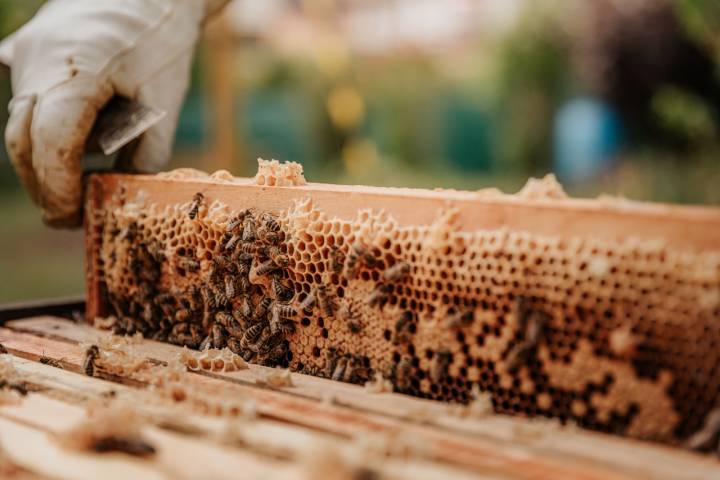
Los Angeles is a year-round hotspot for bees and wasps: mild winters, flowering landscapes, hillside homes, and older stucco construction give colonies plenty of places to move in. You need more than “spray and pray” pest control — you need specialists.
Bee Safe Bee Removal stands out in LA because we:
-
Relocate bees whenever possible
Our team are professional beekeepers first, pest controllers second. We use live-removal methods and transport bees to managed apiaries or partner beekeepers instead of destroying them, except in rare cases where extermination is required for safety. -
Bring decades of hands-on experience
Bee Safe Bee Removal has spent years rescuing and relocating honey bees from walls, roofs, chimneys, trees, fences and commercial buildings across California and other states, with specialized tools and proven techniques. -
Are fully licensed, insured, and bonded
That matters when someone is cutting into siding above a driveway in Hollywood Hills or accessing a roof in Downtown LA. -
Offer transparent estimates before work begins
You receive a clear price range based on photos, access, and repair needs — not vague promises or surprise add-ons. -
Provide structural repair options
When a hive is inside a wall, soffit, eave, or ceiling, we can both remove the bees and honeycomb and perform matching repairs as a separate service, so you’re not left with an open hole. -
Back work with warranties
Bee Safe offers 30-day and extended 1-year warranties on qualifying jobs, particularly where structural repair is involved, so you’re covered if bees re-enter the same spot.
Want to read real customer stories? Explore Bee Safe’s reviews and case studies from jobs across California and Texas.
Live Bee Removal & Relocation in Los Angeles: How Our Process Works
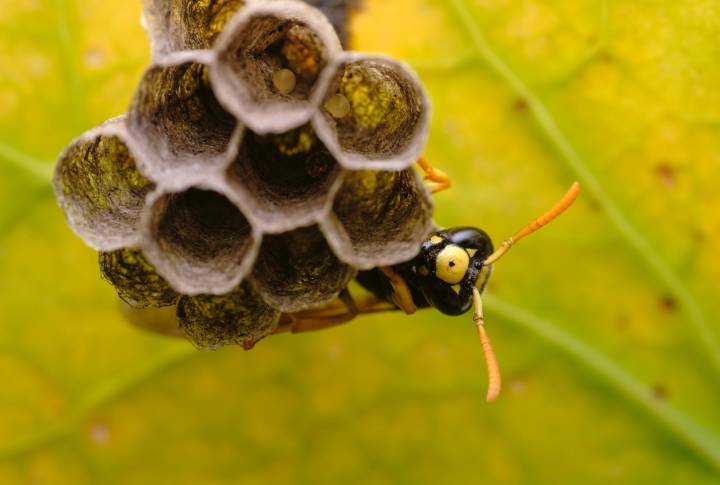
Every property and hive is a little different, but your Los Angeles bee removal typically follows these steps:
1. Free Phone or Online Estimate
- You share photos, a brief description, and your ZIP code.
- We ask where you’re seeing bees (roofline, wall, chimney, tree, meter box, etc.), how long they’ve been there, and whether anyone in the home has sting allergies.
- Based on this, we give you a clear price range and options before scheduling.
Most straightforward swarm removals and accessible hives fall in the $199–$999 range in LA, depending on complexity and repairs.
2. On-Site Inspection & Hive Location
Our beekeeper confirms the source of activity and may use tools such as thermal imaging to pinpoint a hidden hive inside walls, ceilings, or roof voids. We also check for:
- Multiple colonies on the same structure
- Secondary entrances bees may be using
- Structural risks like stucco cracking or water damage from honey
3. Safe Bee Removal & Hive Extraction
Where live relocation is feasible, we:
- Calm the bees using professional beekeeping techniques.
- Use a bee vacuum or hive box to gently collect the bees.
- Open construction only where needed to reach the comb.
- Remove all honeycomb, brood, wax, and debris so honey doesn’t melt into walls or attract new swarms, rodents, or ants later.
For wasps, hornets, or yellow jackets — species that are more aggressive and not easily relocated — we rely on targeted nest treatments with professional-grade products applied only where necessary, then remove nests when possible.
4. Sanitizing, Scent Removal & Repairs
After the bees and comb are gone, we:
- Treat the area to help mask residual pheromones that would attract new colonies.
- Offer construction repair, such as closing cut-outs in stucco, siding, drywall, or soffits, so your home looks as if the hive was never there.
- Discuss preventive sealing or bee-proofing for other vulnerable gaps or cavities.
5. Relocating the Bees
Collected honey bees are moved to managed apiaries or partner beekeepers where they can keep doing what they do best — pollinating crops and producing honey — without threatening your family or tenants.
Curious about the broader removal process? Dive deeper into Bee Safe’s methods on the main Bee Removal service page.
Stinging Insect Services in Los Angeles
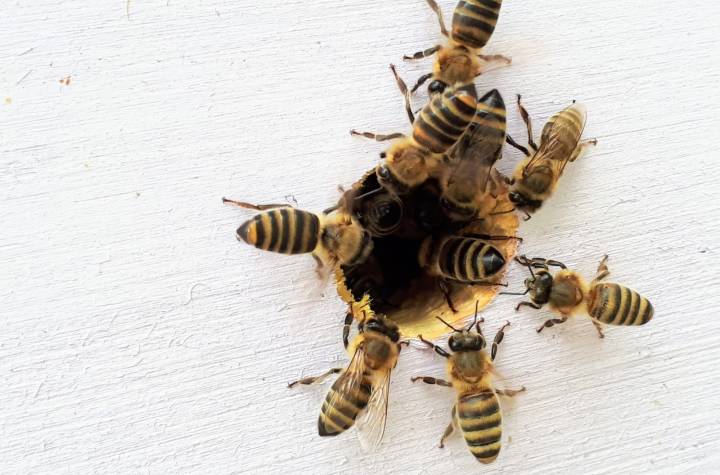
Bee Safe Bee Removal handles more than just honey bees in LA:
Honey Bees
- Often choose eaves, attics, wall voids, chimneys, and meter boxes in Los Angeles homes and apartments for their hives.
- A single hive can house tens of thousands of bees, making DIY attempts dangerous without full protective gear and proper tools.
Wasps, Yellow Jackets & Hornets
- Generally more aggressive than honey bees and capable of stinging multiple times.
- Build nests under patios, play structures, eaves, vents, and trees — common in Valley backyards and Westside patios.
- Best handled by professionals trained in focused nest treatments like Bee Safe’s Wasp Removal service.
Carpenter Bees
-
Tunnel into exposed wood beams, fences, pergolas, and decks, compromising structural integrity over time.
-
We can help determine whether your issue is honey bees or carpenter bees, then suggest the right approach
and follow-up maintenance.
How Much Does Bee Removal Cost in Los Angeles?
Every job is unique, but most professional bee or wasp removals in Los Angeles fall between:
Approx. $199 – $999+ per job
The final price depends on several key factors:
-
Location of the hive or nest
Easy access (a small swarm on a low tree branch in Silver Lake) is typically on the lower end. Hidden hives behind stucco, in high soffits, or under Spanish tile roofing in neighborhoods like Hollywood Hills or Pasadena require more time, materials, and safety equipment. -
Height & access complexity
Second-story walls, steep roofs, or difficult ladder placements add labor and safety measures. -
Type & size of colony
A small swarm costs less than a large, long-established hive dripping with honey inside walls or ceilings. Wasp, hornet, and yellow jacket nests may require follow-up checks for complete eradication. -
Construction repair needs
Simple cut-and-patch work is more affordable than full soffit rebuilds or fascia repair. -
Urgency / emergency response
Same-day requests after someone is stung or bees enter living spaces can carry a premium, though Bee Safe works hard to keep pricing competitive with local specialists.
Even when a complex removal is at the higher end of the range, professional work usually saves money compared with DIY attempts that lead to hospital bills, failed treatments, repeated re-infestations or major water and honey damage inside walls.
Why Saving Bees Matters in a City Like Los Angeles
Los Angeles isn’t just about freeways and film sets — it’s home to community gardens, urban farms, citrus trees, rooftop planters, and miles of ornamental landscaping. Bees are a cornerstone of this urban ecosystem.
- Animal pollinators support about three-quarters of flowering plants and more than 75% of food crops, helping secure our food supply and biodiversity (Food and Agriculture Organization, 2025).
- Researchers estimate that one out of every three bites of food we eat depends on animal pollinators like bees (U.S. Department of Agriculture, 2020).
- Scientific studies show that bee-pollinated crops contribute roughly one-third of the human dietary supply, boosting both crop quantity and nutritional quality (Khalifa et al., 2021).
- In the United States, honey bee pollination is valued at around $15 billion annually for crops such as almonds, berries and many fruits — California heavily depends on these services (USDA; U.S. Food and Drug Administration, 2018).
California has recognized how vital bees are by implementing statewide pollinator protection regulations and a Managed Pollinator Protection Plan through the California Department of Food and Agriculture and the Department of Pesticide Regulation. These efforts promote safer pesticide practices and better communication among growers, pest control businesses, and beekeepers.
By choosing live bee removal instead of indiscriminate extermination, Los Angeles property owners help support these broader conservation efforts while still protecting homes, tenants, and customers.
If you want to learn more, take a look at Bee Safe’s educational blog post Why Are Bees Important? to understand the real-world consequences of losing pollinators.
For additional educational resources on pollinators, you can explore:
- Food and Agriculture Organization of the United Nations (FAO)
- U.S. Department of Agriculture – Pollinators
- California Department of Food and Agriculture
- California Department of Pesticide Regulation
LA-Specific Bee & Wasp Risks
In the Los Angeles area, you’ll most often see:
- Honey bee hives inside stucco walls, tile roofs, and eaves in neighborhoods like Los Feliz, Highland Park, Sherman Oaks, and Culver City.
- Swarms gathering temporarily on trees, fences, and light poles in Downtown LA, Koreatown, and Westlake — these are usually easier and more affordable to relocate if treated quickly.
- Paper wasps and yellow jackets nesting under decks, in playground equipment or under patio roofs in the San Fernando Valley and South LA.
Local public agencies, such as Los Angeles County vector control and animal care departments, may respond when bees or wasps pose a direct public health hazard in public spaces. For private property, however, most homeowners rely on licensed specialists like Bee Safe Bee Removal for comprehensive removal, structural repair, and eco-friendly options.
You can learn more about vector management on pages such as the Los Angeles County West Vector Control District.
Get a free estimate with just one click!
We are eco-friendly, fast and affordable. All of our inspections are 100% free. Our expert removal teams do whats best for you and the environment. That is why our customers love us. Call now to book your appointment today.
Call Now!Honey bees are nature's pollinators and a crucial part of our environment, which is what makes their recent population decline so important. The most commonly known cause for this is the use of pesticides to drive them out of unsuitable places, like people's home or business. There are other ways, however, that you can rid yourself of your bee infestation without killing the hive.
At Bee Safe Bee Removal, our professionally trained beekeepers will safely relocate the bees without harming them or posing any risk to your property.
Having a beehive on your property can not only pose a life-threatening risk to you or your family, especially if there is someone who is allergic to their stings, but it can also pose a risk to the structure of your home or business. This is why it is very important to contact a professional beekeeper as soon as you see any bee activity on your property so they can be removed before they become a huge problem. If bees decide to build a hive inside the structure of your property, the melted wax and honey will attract other unwanted pests as well as destroy your building structure.
At Bee Safe Bee Removal, our bee removal technicians will use state-of-the-art thermal devices to detect where the beehive is located. From there, they will present you with various affordable options you can choose to remove the bees depending on your price point. The beekeeper will then use professional gear to safely remove your bee infestation without any harm to you or your property.
After bee removal, any honey leftover is yours to keep! It's important to remember never to attempt a beehive removal on your own as one hive can house up to fifty thousand bees. Numerous bee stings can be dangerous so it's always the best choice to work with a professional pest control company or beekeeper to aid you in removing your bee infestation safely and efficiently.
At Bee Safe Bee Removal, we use various safe and humane methods for the removal of beehives that are completely harmless to bees and to your property. Give us a call today at (888) 585-7087, we offer same-day bee removal.
Paying a professional bee removal service to remove bees from your home or business can save you so much more money than attempting the do it yourself approach.
At Bee Safe Bee Removal, our professional beekeepers will not only protect you during the removal process but the bees as well, who are relocated to a safer place where they can continue to pollinate and contribute to our environment.
Attempting to remove a beehive yourself will not only cost you money in collecting the proper safety and removal gear, but can also lead to unplanned hospital bills if you're allergic or stung too many times. Not only is the do it yourself process a risk to your health, it's also a risk to your property, especially if you don't know what you're doing.
Contacting our bee experts at Bee Safe Bee Removal will not only save you more money than the do it yourself bee removal approach, it will also protect you, your loved ones, and your home or business. Key factors affecting the cost of a bee removal:
-
Location of the beehive There are many factors that contribute to the cost range of removing a hive from your property, the first one being where the hive is located. Our expert beekeepers will use state of the art thermal imaging to locate the beehive on your property. The easier our pest control professionals can get to the bees, the more affordable the job will be.
Likewise, if the bees are in a difficult location to reach, such as in a high tree, behind siding, or inside the walls of your property, then the price will understandably be higher. It is also important to note that local laws may consider bees in a home's structure to be a health and safety issue and should be removed quickly to avoid legal complications.
-
Number of bees in the hive Another factor that determines the cost is the size of bee infestation and how many bees are housed inside the hive. Honey bees like to build their colonies inside or on structures, including your house or yard. Bumble bees prefer to build their hive in the ground and carpenter bees like to burrow into wood structures.
The number of bees affects the price in that one hive could potentially house up to fifty thousand bees, which would take time to remove. Once the bees are located, our beekeeper will present you with different removal options. Removing bees may include cutting holes into the wall or ceiling of your structure as well as repairing it after the bees and hive are removed.
If our bee removal team finds a dead hive inside the structure of your home or business, they will not only have to remove the hive, dead bees, and honey dripping, they might also have to remove any other pests that were attracted to the honey and the damaged structure around that.
-
Swarm vs. Hive If the bees have not made their nest inside your property and are simply swarming outside, our beekeepers would smoke the bees inside an apiary box and relocated them to a safer place, which tends to be our more affordable option.
If you've noticed bees lingering around your home or business, they've likely made their hive somewhere close. If this is the case, do not attempt to remove them yourself, as this can pose a dangerous risk to you or your family.
Our certified and experienced beekeepers at Bee Safe Bee Removal will safely and efficiently take care of your bee infestation with the appropriate safety gear and removal method. Even though they are small, bees can become quite aggressive and one hive can contain thousands of bees that will attack if they feel threatened.
For professional removal services, call Bee Safe Bee Removal today at (888) 585-7087, we offer same day service and will get rid of your bee issue in no time! If left unattended, beehives can quickly grow in number and become a danger, not only to your family, but to your property as well.
They can create a life-threatening situation to someone who is allergic to their venom or if they are stung multiple times. If a beehive is left inside the walls of your structure, the honey can seep into the walls and not only destroy your home or business, but attract other unwanted pests as well. If you require bee removal in Dallas, Bee Safe Bee Removal will get the job done quickly and affordably.
Our years of experience and customer satisfaction and safety allow us to be one of the top-rated bee removal companies in the area. Not only do we take care of your bee infestation, we can also help with bee control, full hive removal, bee proofing, Africanized bee control, yellow jacket removal, wasp removal, and protection against bumblebees and other stinging insects.
One hive can contain thousands of bees and removing them yourself can pose a life-threatening risk. Bee Safe Bee Removal will take care of your beehive safely and efficiently. Call Bee Safe Bee Removal today, before your bees become a real danger. Here is the list of questions you need to ask when finding a local professional beekeeper:
-
How many years of experience do you have removing bees? This will help you weed out novice beekeepers. We suggest looking for companies with more than 10 years experience.
-
Are you state licensed for pest control? This is important. Should the beekeeper find it necessary to apply pesticide to keep bees from returning, they are required by law to carry the appropriate license.
-
Are you highly rated by the Better Business Bureau, Yelp and Google? The more positive reviews a bee removal company has, the better.
-
What is your warranty? Reputable bee removal companies will offer a warranty. Be careful of companies that do not have a service warranty.